#10 Neural Implants
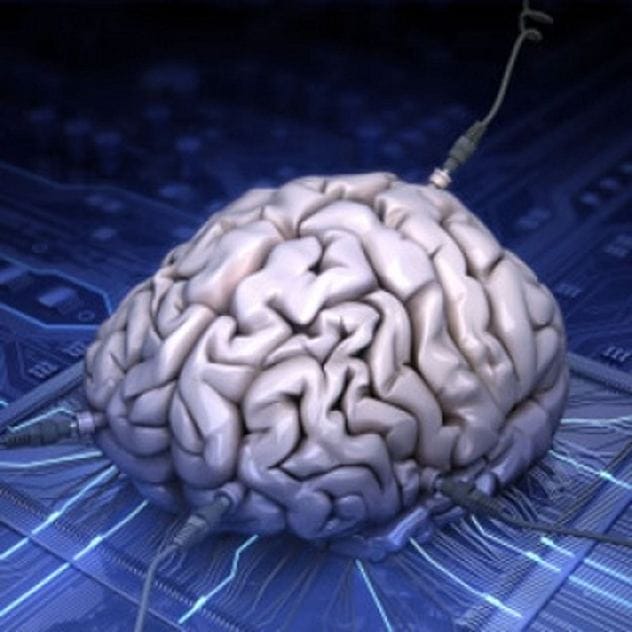
Neural implants is a complicated process. A neural implant is any device which is actually inserted inside the grey matter of the brain. While a neural implant can be a BCI and vice versa, the terms are in no way synonymous. What exoskeletons do for the body, implants do for the brain-while most are meant to repair damaged areas and restore cognitive function, others are meant to give the brain a power assist or a pathway to external devices.
It has been proven effective at treating Parkinson's disease and dystonia, and has also been used to treat chronic pain and depression with varying degrees of efficacy. Thus far, the most commonly used neural implants are cochlear implants (approved by the FDA in 1984) and retinal implants, both pioneered in the 1960s and proven effective at partially restoring hearing and vision, respectively. Surely a superhuman technology!

#9 Powered Exoskeletons
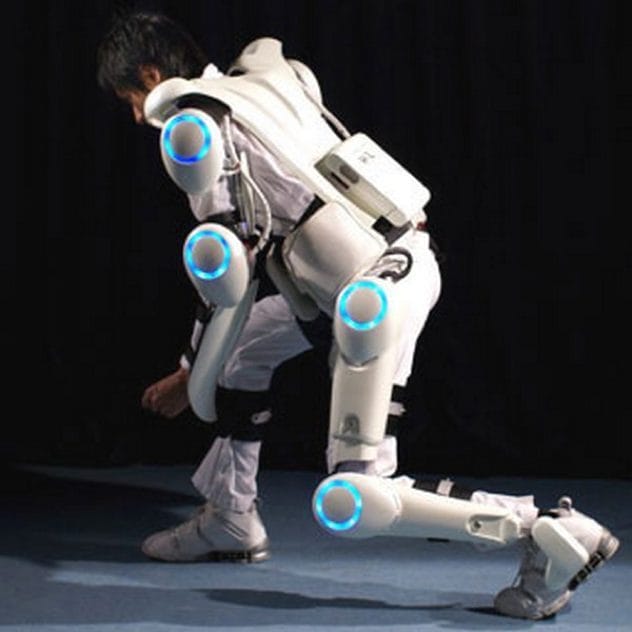
Powered exoskeletons are the true examples of the advancement in technology. The general public's concept of the powered exoskeleton is more like "powered battle armor" on account of the Robert Heinlein novel "Starship Troopers" and also a very popular character from an increasingly pervasive multimedia franchise. The tech that's actually being developed is less geared toward battling giant robots and invading aliens, and more toward either restoring mobility to the disabled, or augmenting endurance and load-carrying capacity.
For example, one company manufactures a 50 pound aluminum and titanium suit called the Ekso that has seen use in dozens of hospitals around the U.S. People with spinal cord injuries can also walk because of this. Truly brilliant.
#8 Brain/Computer Interface
This is again an example of modern technology. A "BCI" is exactly what it sounds like-a communication link between the human brain and an external device. BCIs have been the realm of sci-fi for decades, but believe it or not this hasn't been speculative technology for some time-there are many different types of completely functional interfaces for a variety of applications, and the earliest devices of this type to be tested in humans showed up in the mid '90s. And, it's safe to say that the research is not slowing down.
In a nutshell, the device picks up the eyes' signals that are routed to the back of the brain, and analyzes the different frequencies to determine what the patient is looking at-enabling them to move a cursor on a screen using only eye movements, using a device that amounts to a helmet. This will Indeed make us superhumans.

#7 Cyberware
Cyberware is an ideal technology for Superhuman movie fans. Prosthetics have been used to replace missing limbs for decades, but the modern version-cyberware-strives not for just an aesthetic replacement, but a functional one. That is, to restore a missing limb with a natural functionality and appearance. And while the use of aforementioned brain interfaces to control robotic prosthetic devices is already happening, other explorations in this field seek to remove limitations inherent to this scheme. So a superhuman without the real hand. We'll definitely accept this.

#6 Human Genetic Engineering
Well this is not new but certainly very effective. Human gene therapy and genetic engineering holds at once the most promise AND the most potential for a vast array of complications than perhaps any other scientific development ever. The understanding of evolution and the ability to modify genetic components is so new to science that it is a gross understatement to say that its implications are not yet understood; of the applications that are known to be possible (and there are many), the majority are still in the "too dangerous to even attempt on humans" phase of development. No matter how dangerous it is, we'll still let it come to us.
#5 Nanomedicine
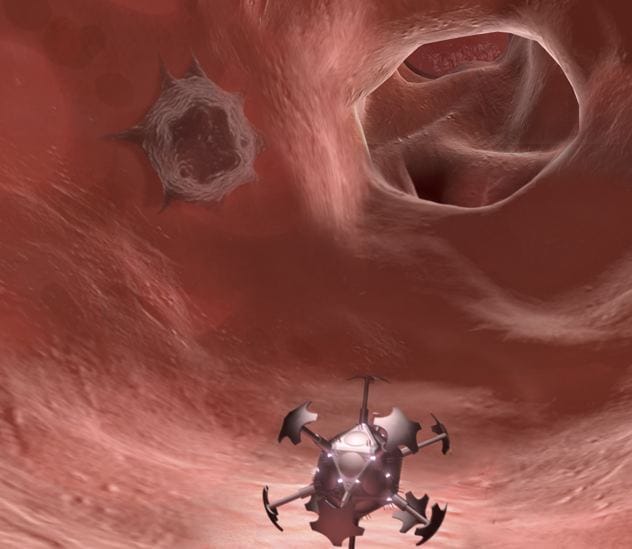
Nano technology is very impressive and has gained lot of appreciation over the period of years. Nano tech is quite prevalent in the public imagination as a likely cause of the end of the world, but this is a technology that is coming along at a lightning pace-and its medical applications, taken to their logical endpoint, hold the promise of nothing less than the eradication of all human diseases and maladies-up to and including death.
Current nano medicine applications involve new and highly accurate ways to deliver drugs to specific locations in the body, along with other treatment methods involving tiny particles-tiny on a molecular level-dispersed into the body. For example, an experimental lung cancer treatment uses nano particles that are inhaled by aerosol, settling in diseased areas of the lungs; using an external magnet, the particles are then superheated, killing the diseased cells. The body's own response eliminates the dead cells AND the nano particles. This method has been used successfully in mice, and while it will not yet kill 100% of the diseased cells in an affected area, it's close-and the tech is in its infancy. This is tech at its very best.
#4 Exocortex
This technology is certainly not as complicated as its name suggests. Extrapolating many concepts from the previous examples into the future, consider the Exocortex. This is a theoretical information processing system that would interact with, and enhance the capabilities of, your biological brain-the true merging of mind and computer. This doesn't just mean that your brain would have better information storage (though it would mean that), but better processing power-exocortices would aid in high-level thinking and cognition, and if that sounds a little heavy, remember that humans have long used external systems for this purpose. very nice. Bring it on!

#3 Brain Preservation
I know this sounds odd but trust me when I say you to trust the odds this time. It is here that we get into the realm of what has become known as "Transhumanism"-the notion that we may one day be able to surpass our physical limits, to perhaps even discard our bodies or live beyond them. This notion was first suggested as a realistic prospect by Robert Ettinger, who in 1962 wrote "The Prospect Of Immortality", and is considered a pioneering Transhumanist and the father of Cryonics.
Let us inform you a bit more about this. That is essentially the study of the preservation of humans or animals (or parts of them, like the brain) using extremely low temperatures (below ?150 C, or ?238 F), which was the best means of preservation available at the time Ettinger wrote his book. Today's brain preservation studies focus more on chemical preservation, which has been demonstrated on brain tissue (but not an entire brain) and does not require the ridiculous temperatures demanded by Cryonics.
#2 Synthetic Bodies
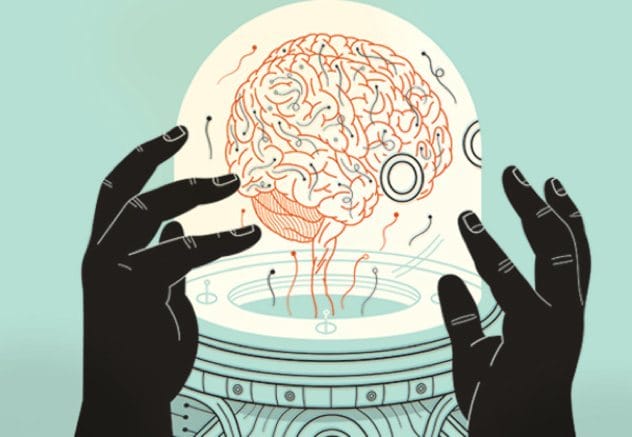
We know the fact that there are certain body parts that science can actually replace but here we are talking different. As we're able to replace more and more of our body parts with versions that have been engineered, grown in a lab or both, it stands to reason that we'll one day reach an endpoint-a point at which every part of the human body is able to be replicated, including the brain. Right now, a collaborative effort between 15 research institutions is underway trying to create hardware which emulates different sections of the human brain-their first prototype being an 8 inch wafer containing 51 million artificial synapses.

#1 Mind Uploading
Brain, indeed, is the most crucial part of our body. It guides us towards the things that we do. Of course, many argue that brain functions cannot be reduced to simple computation-that they are not "computable" and that consciousness itself poses a problem that science will never be able to solve. There is also the matter of whether an uploaded or otherwise "backed up" mind is indeed a different entity from that which was copied, a different consciousness altogether. Hopefully, these are questions that neuroscience will soon be able to answer. But if indeed we are ever able to inject our very minds into the digital realm, the obvious implication is that our consciousness need never terminate-we need never die. And this, in every sense is so super human.